

Traffic Light Pole Systems
Traffic light pole systems are essential components of modern road infrastructure, designed to support traffic signals and related equipment at intersections, pedestrian crossings, highway ramps, and other controlled traffic zones. Their primary function is to position signal heads at appropriate heights and angles so that drivers, cyclists, and pedestrians can clearly see traffic instructions from a safe distance. Beyond simply holding lights, these systems contribute to roadway safety, traffic efficiency, and the orderly movement of vehicles and people in urban and suburban environments.A typical traffic light pole system consists of a vertical pole, mounting arms or brackets, signal heads, wiring channels, foundations, and sometimes additional attachments such as pedestrian buttons, surveillance cameras, countdown timers, or street lighting fixtures. The design may vary depending on the location and traffic needs. For example, intersections with multiple lanes often require mast arms that extend over the roadway to provide better visibility, while smaller intersections may use simpler vertical poles installed at the roadside.Materials used in traffic light pole systems are selected for strength, durability, and weather resistance. Steel is commonly used because it can withstand heavy loads, strong winds, and long-term exposure to outdoor conditions. To improve corrosion resistance, poles are often galvanized or coated with protective finishes. In some cases, aluminum or other lightweight materials may be used for specific applications, especially where reduced weight or easier installation is important. The foundation of the pole system is also critical, as it must securely anchor the structure against vibration, wind pressure, and accidental impact.Engineering considerations play a major role in the design of traffic light pole systems. Height, reach, load capacity, and placement must all comply with local traffic standards and visibility requirements. The signal heads must be positioned so they are visible to approaching traffic without being blocked by trees, buildings, or other structures. In addition, poles must be designed to allow safe maintenance access. Technicians need to inspect wiring, replace bulbs or LED modules, and service control devices without causing unnecessary disruption to traffic.Modern traffic light pole systems increasingly support smart transportation technologies. They may be integrated with sensors that detect vehicle flow, pedestrian movement, or environmental conditions. Some systems are connected to centralized traffic management networks, allowing real-time signal adjustment to reduce congestion and improve response during emergencies. LED signal technology has also become common, offering better brightness, lower energy consumption, and longer service life compared with older lighting methods.Aesthetics and urban planning are also important in pole system design. In city centers, poles may be designed with a cleaner appearance to match surrounding architecture and public spaces. In highway or industrial areas, the focus is more on functionality and visibility. Regardless of style, the main purpose remains the same: to support safe, efficient, and reliable traffic control.In summary, traffic light pole systems are vital for the operation of traffic signals and the management of road networks. They combine structural engineering, safety requirements, and modern technology to create dependable installations that help reduce accidents and improve transportation flow.
produkt
Klasifikace:
-
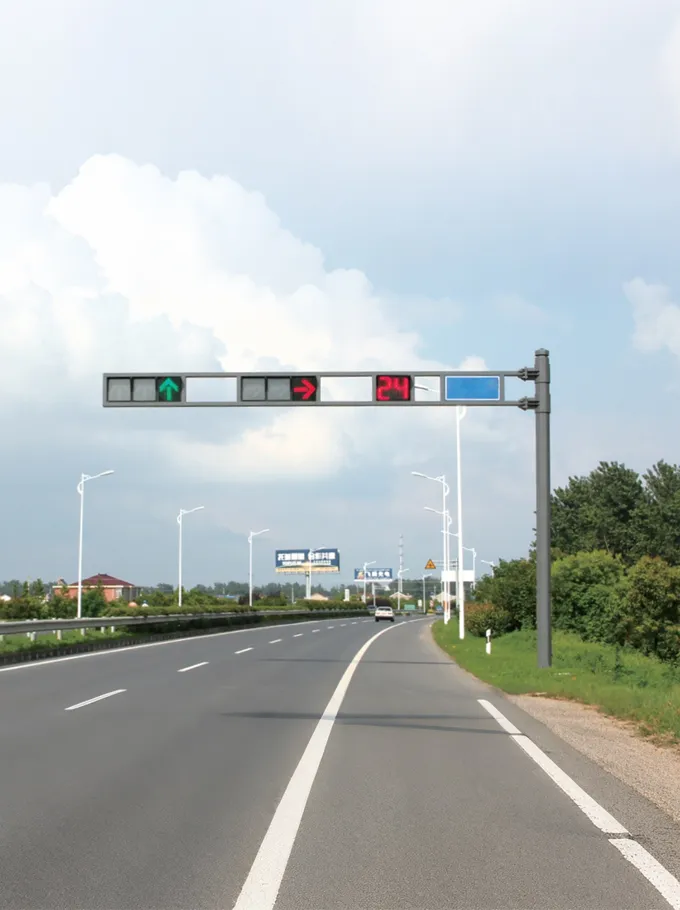
Integrated Traffic Signal Pole Series
kategorie: Traffic Signal PolesPohledy: 46sériové číslo:čas vydání: 2026-08-19 16:14:14The Integrated Traffic Signal Pole Series combines vehicle signals, pedestrian signals, countdown displays, road signs and optional solar equipment within coordinated steel pole structures. Available in cantilever, vertical and multi-directional configurations, the series is suitable for intersections, urban roads and municipal traffic projects. Pole dimensions, arm layouts, signal positions and surface treatments can be customized for different road conditions and local standards.
zprávy
Klasifikace:
Zatím žádné výsledky vyhledávání!
pouzdro
Klasifikace:
Zatím žádné výsledky vyhledávání!
video
Klasifikace:
Zatím žádné výsledky vyhledávání!
stažení
Klasifikace:
Zatím žádné výsledky vyhledávání!
nábor
Klasifikace:
Zatím žádné výsledky vyhledávání!
Doporučené produkty
Zatím žádné výsledky vyhledávání!


